AI Escape Room
Pilot · A team escape room where project managers learn practical AI by rescuing a project charter before the steering committee sees it.
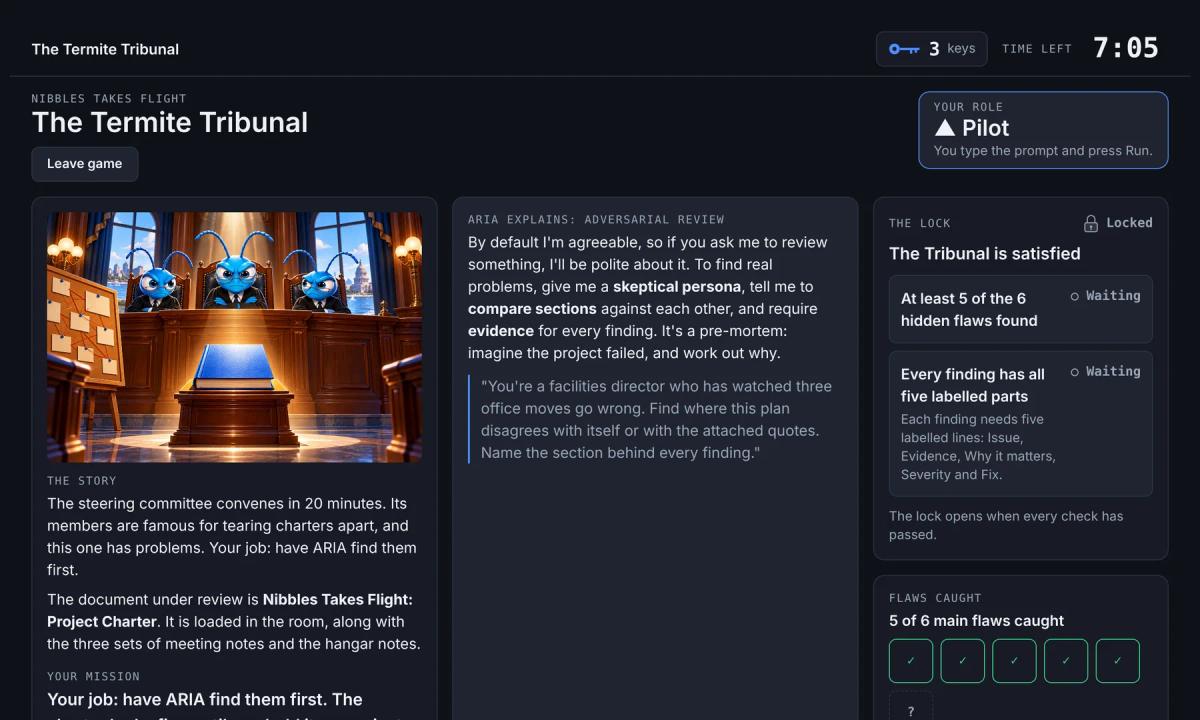
The AI Escape Room turns AI training for project managers from a slide deck into a live, timed, team game. Teams work through five rooms in about 90 minutes, and each lock is graded against what a good PM would actually produce.
The Problem
Most AI training for project managers stops at "here is a prompt that worked for me." People leave with a list of tips and no feel for the habits that matter: giving the model the right context, checking its claims against the record, and keeping a person in charge of anything that leaves the building. Chapter events have the opposite problem. They are social and engaging, but rarely teach a skill someone uses on Monday.
The AI Escape Room was built for the Ocean State chapter of PMI (OSPMI) to do both: an event members enjoy that also earns PDUs and changes how they use AI on real projects. Its first live session runs on Zoom in November 2026.
The System
Teams of PMs join a shared session and get a mission. Nibbles, the Big Blue Bug on the I-95 roof, is being turned into a passenger seaglider, and the project charter is a mess. ARIA, the project's AI analyst, is fast, eager, and sometimes wrong. Each room teaches one technique, and the team earns a key that carries into the next room.
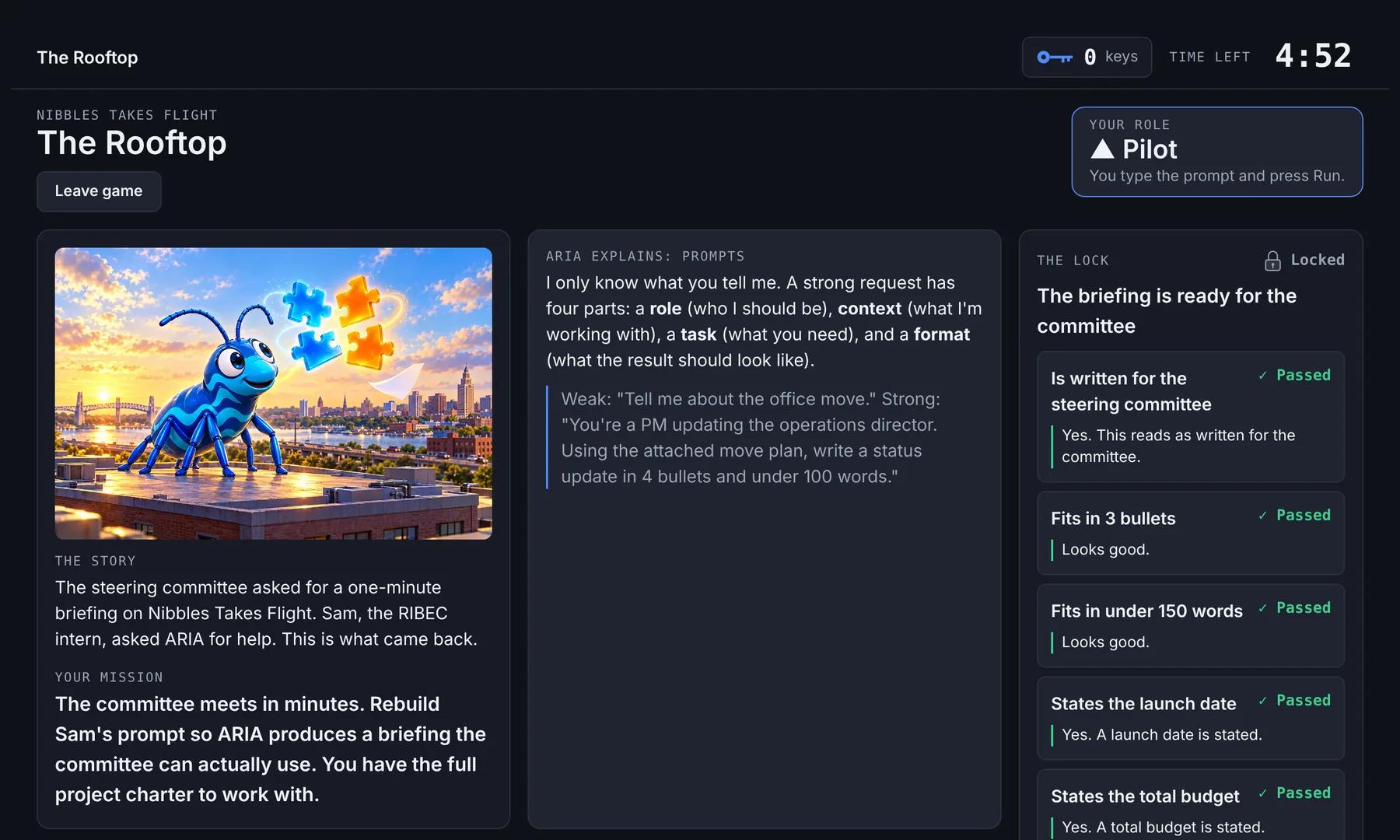
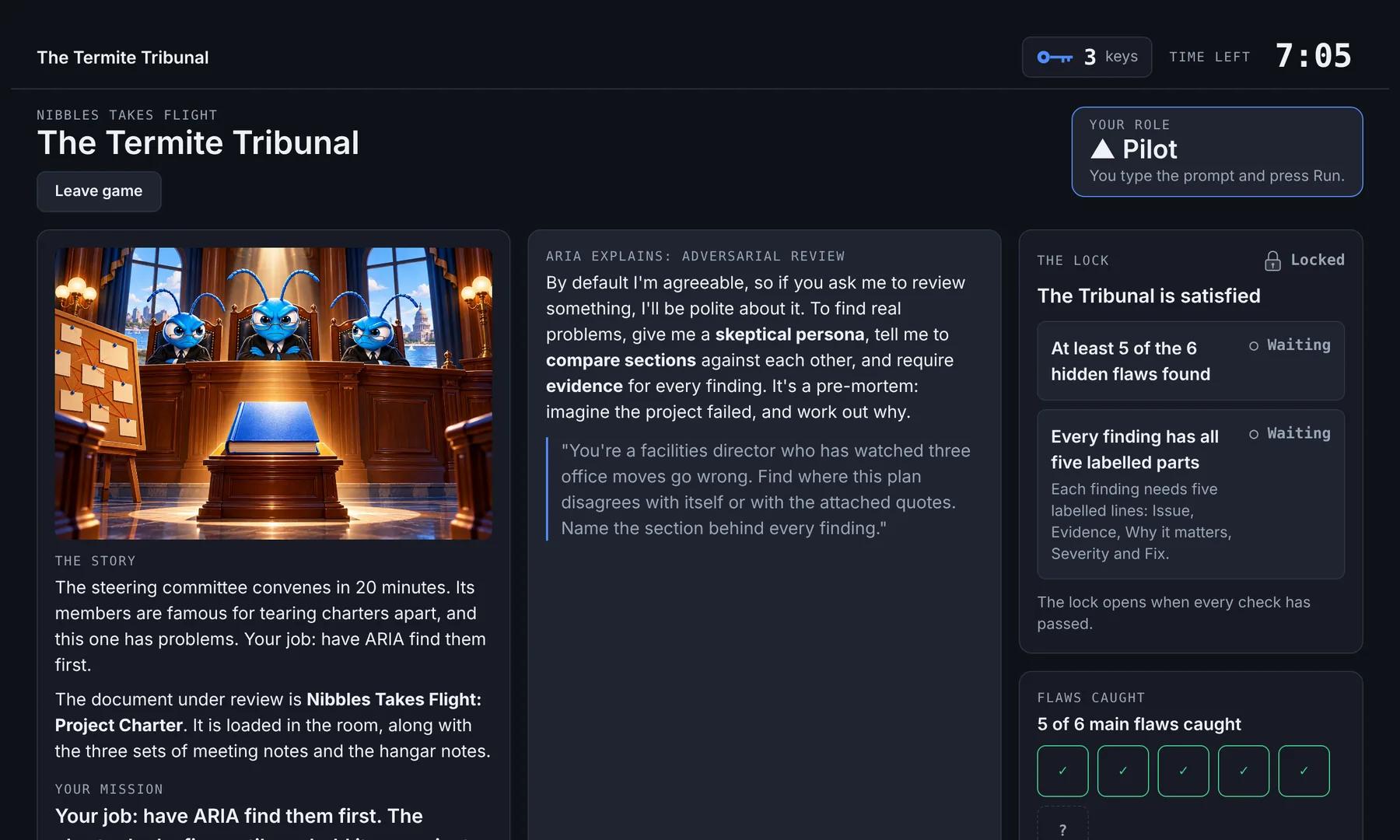
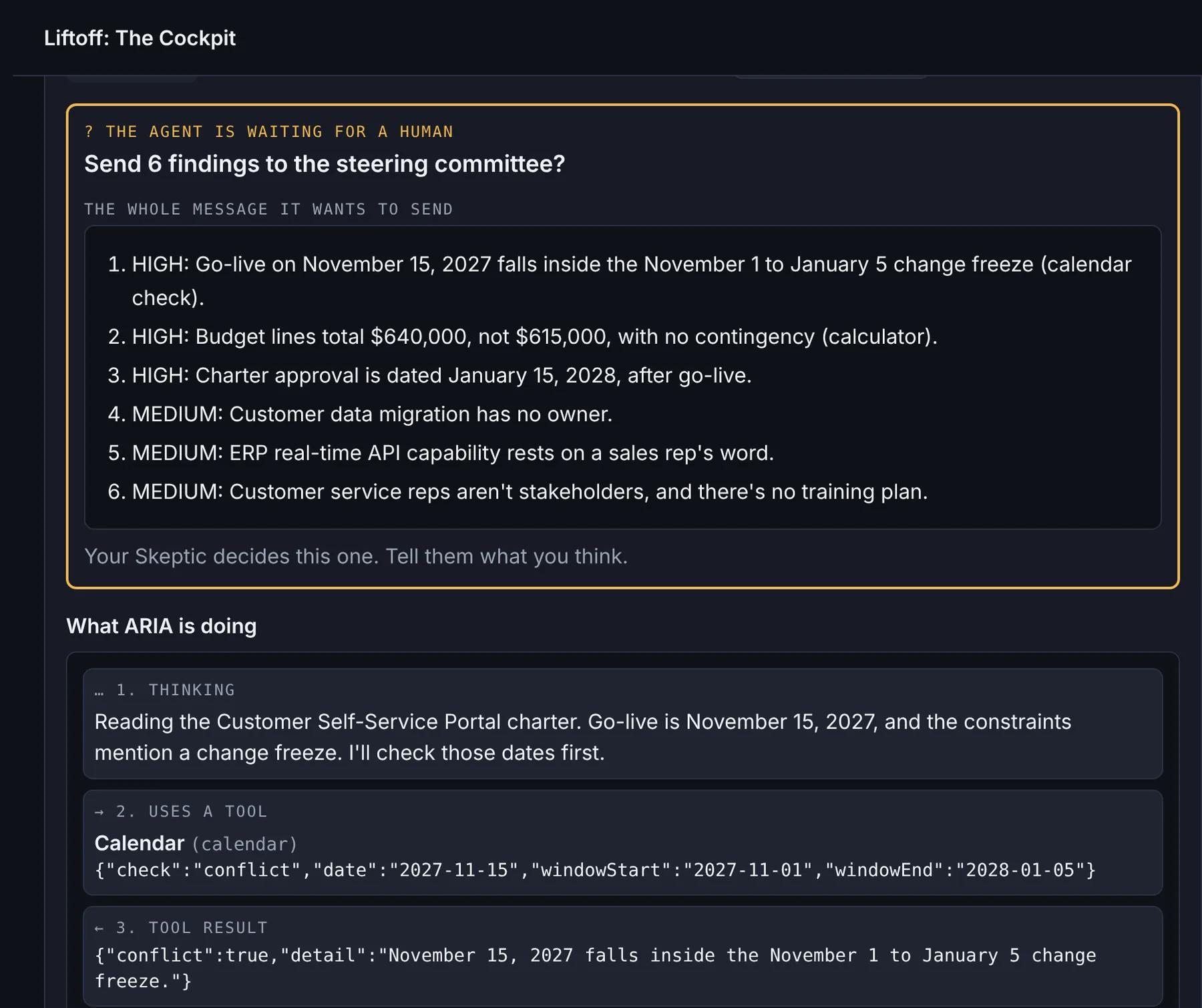
Room 1 is prompt structure: role, context, task, and format. Room 2 is grounding: find the summary line ARIA made up, then make it cite sources and admit what it does not know. Room 3 is structured output: turn rambling field notes into a risk register where an unowned risk is a finding, not a blank. Room 4 is adversarial review: build a skeptical reviewer that finds the charter's planted flaws. Liftoff turns everything into an agent with tools and a human approval checkpoint, run on a realistic charter or the player's own document.
Graded by AI, Calibrated Like a Product
Locks are checked by code where a rule is exact and by an AI judge with majority voting where it takes judgment. The judge can run on a different provider than ARIA to reduce self-preference, and answer keys never reach a player's browser. Before the first event, independent AI reviewers that had never seen the answer key reviewed the Room 4 charter. A naive prompt and a carefully engineered one scored the same on the charter alone, and neither could open the door. The review that brought evidence from earlier rooms caught every planted flaw.
That result reshaped the room. Two flaws now count only when the finding cites evidence from earlier rooms, decoys that turned out to be legitimate problems were removed, and the debrief leads with the real lesson: AI is only as good as the context you give it.
How It Was Built
The app is Next.js and TypeScript on Vercel, with Supabase for data and private realtime channels, and provider adapters for both Claude and OpenAI so either can be swapped per event. Uploaded documents get pattern-based redaction the player confirms, and are deleted within 24 hours. The build itself ran on the delivery discipline MLLytics sells: frozen interface contracts, acceptance tests written before code, and parallel Claude Code agents working in isolated worktrees, each limited to the folders it owns, with nothing merged without a human gate.
Why It Matters
For a professional association, it is a chapter event people talk about afterwards that also qualifies for PDUs. For a project manager, it is four habits practiced under a clock, plus a working charter review agent they take home. For organizations rolling out AI, it is a pattern worth copying: teach the skill in context, measure it with a grader you have calibrated, and keep a person accountable for what the AI sends.
Who It Serves
PMI chapters and professional associations, PMO leaders running AI enablement, and corporate learning teams who want AI training that is measured rather than attended.
Ready to get your AI into production?
Book a 30-minute conversation to discuss your AI goals. No pressure, no commitment: just a conversation about what's possible.